Vendor Content Experience
Designing connection into virtual events
Kroger Technology & Digital
I led discovery, research, and information architecture for a vendor-facing resource designed to make requirements, policies, onboarding materials, and compliance expectations easier to understand and navigate.
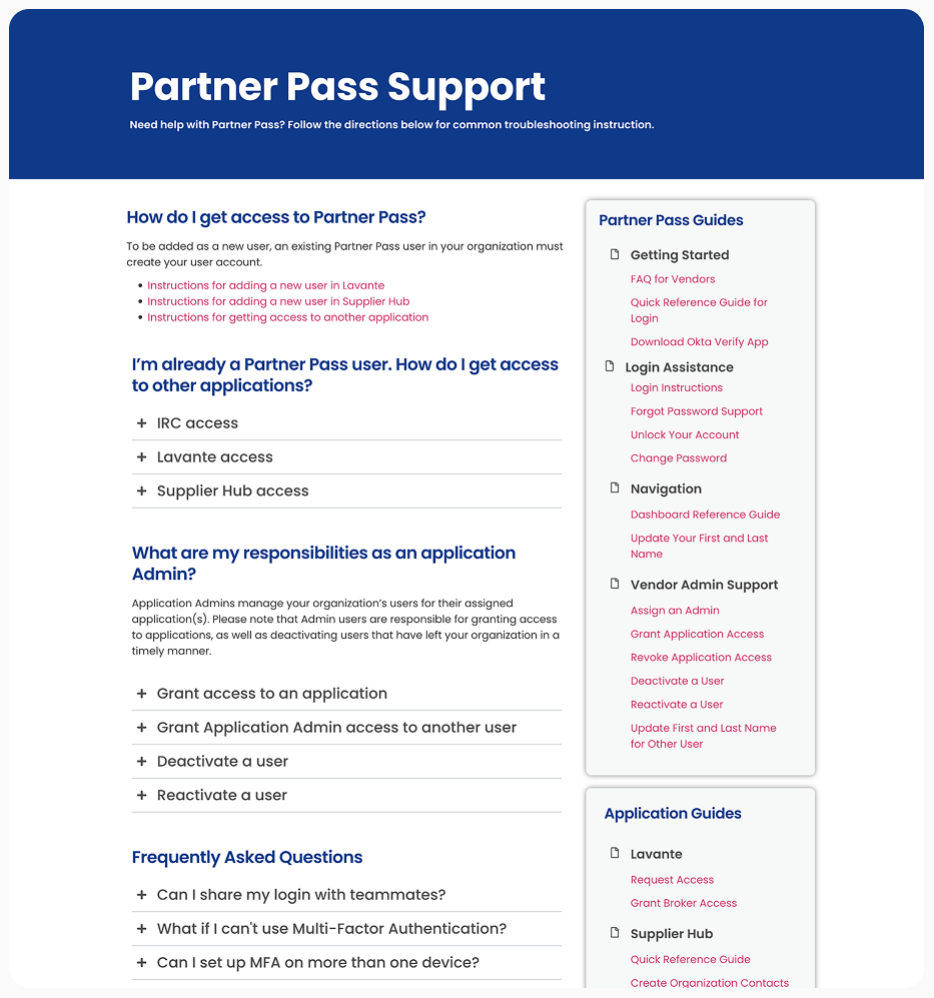
The experience had become a scavenger hunt.
Content had evolved around internal departments rather than vendor needs, leaving users to navigate multiple pages, find relevant documents, determine what applied to them, and piece together their own next steps.
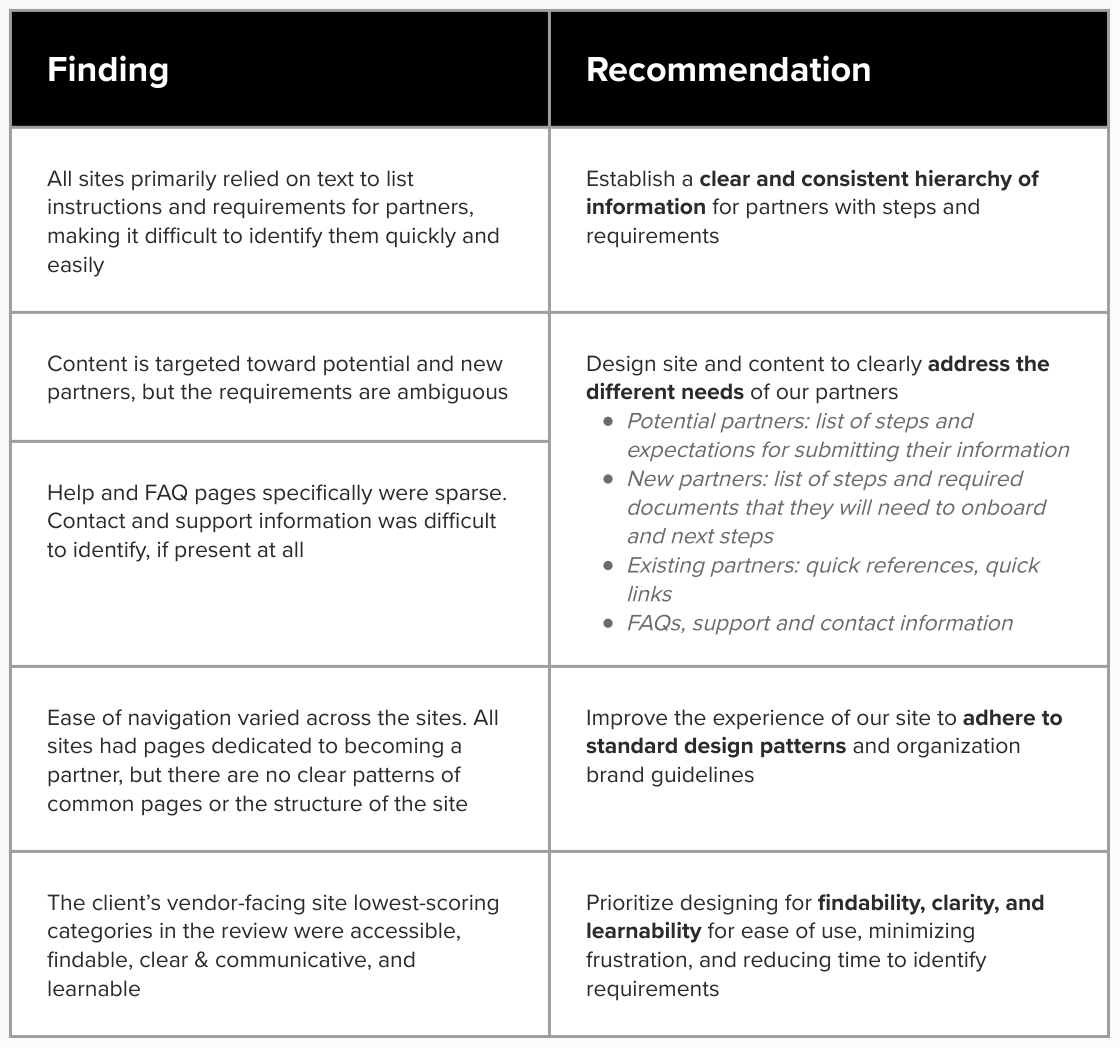
I conducted a heuristic evaluation and competitive analysis to identify gaps in the existing experience and understand how comparable vendor-facing sites approached these challenges. The analysis surfaced opportunities around findability, clarity, consistency, accessibility, and learnability.
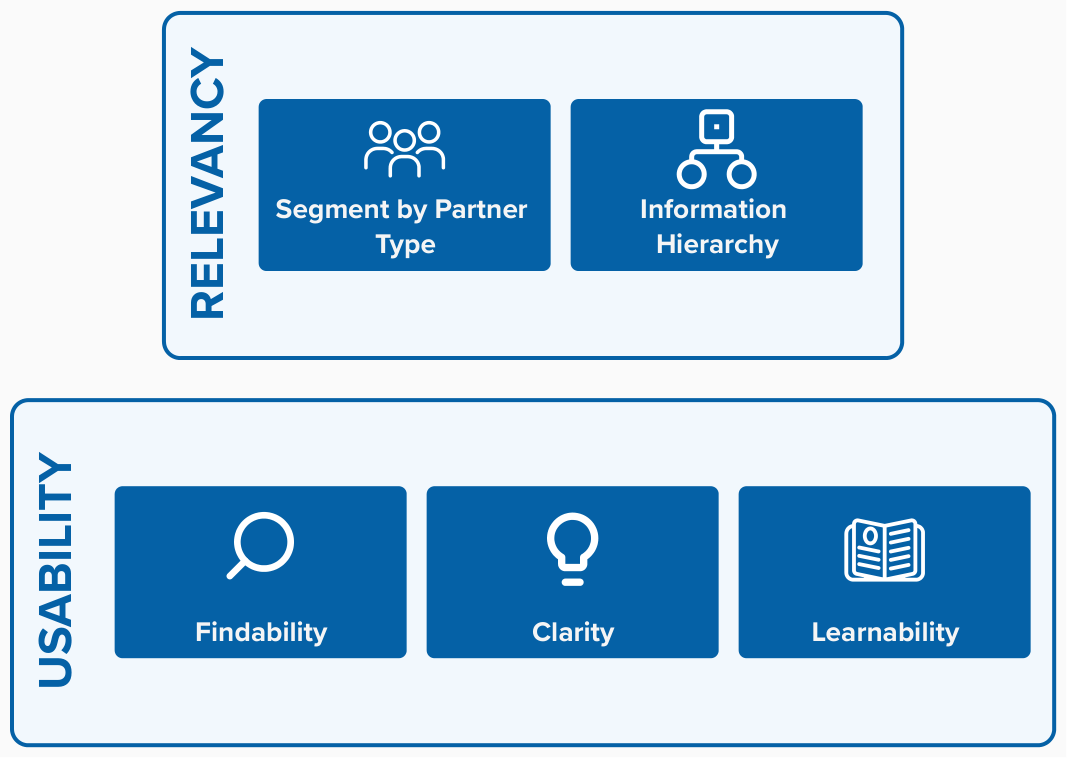
These findings became the foundation for a design philosophy for the future experience, which I translated into wireframes to visualize the direction, confirm requirements, and align stakeholders before implementation.
From publishing information to designing an experience
Rather than redesigning individual pages, I reframed the experience around the needs of vendors navigating requirements and expectations.
A new information architecture
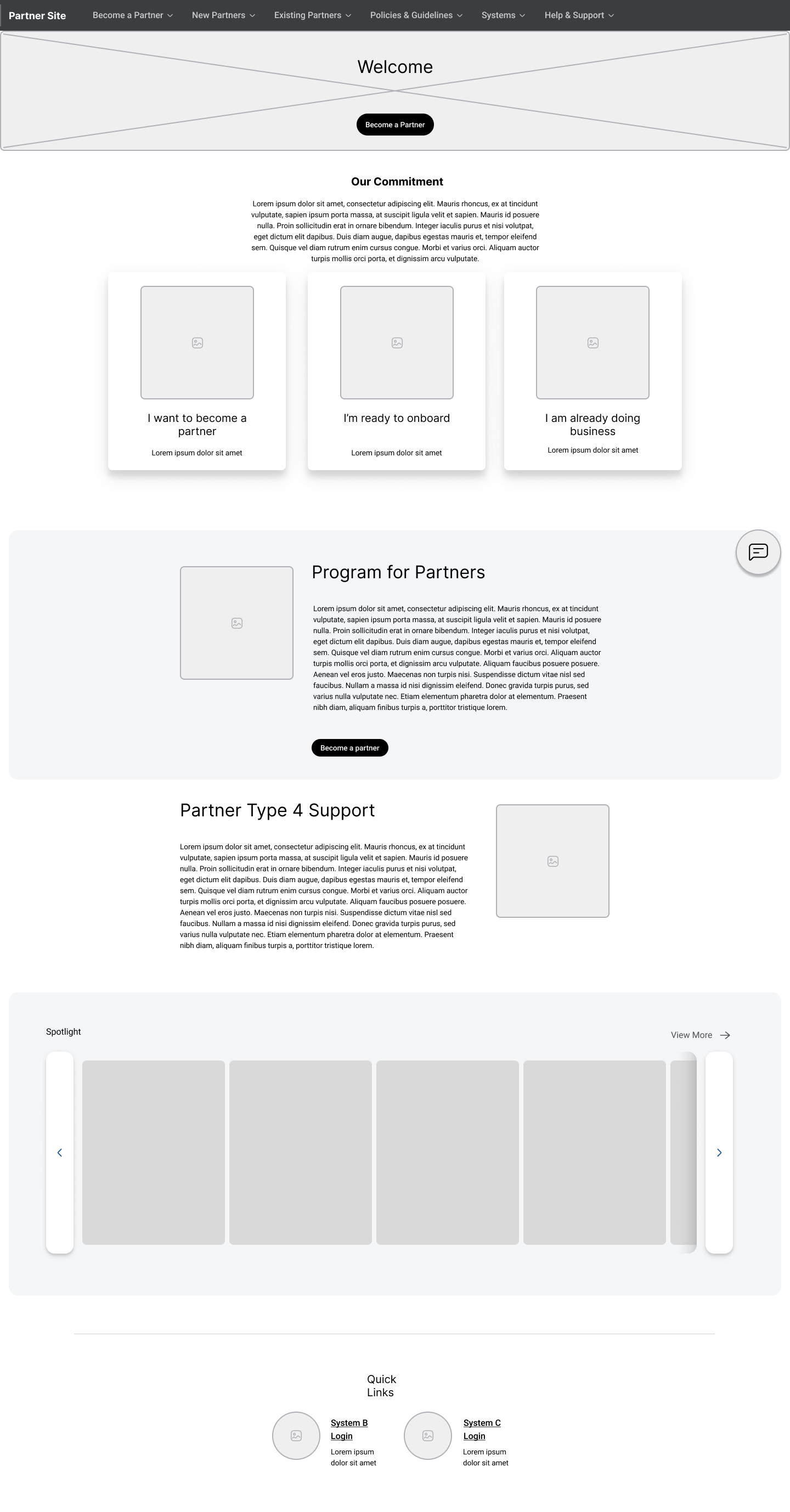
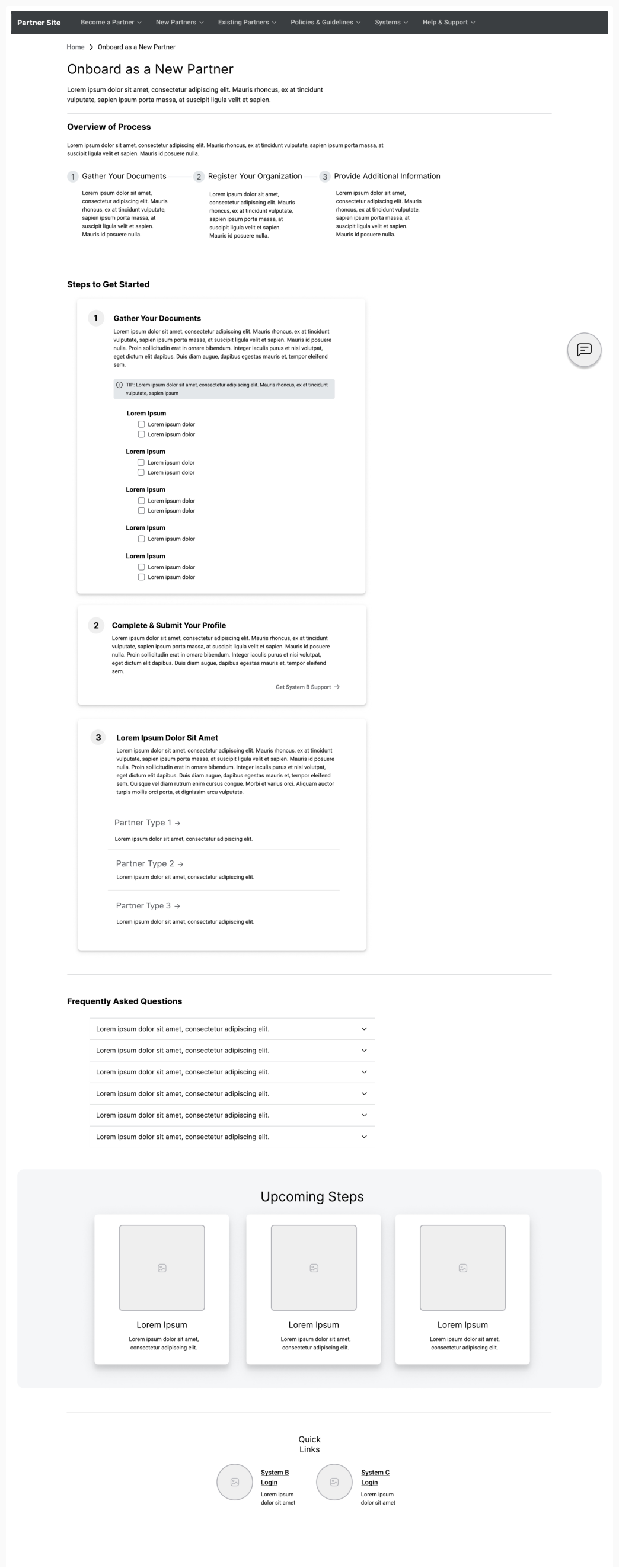
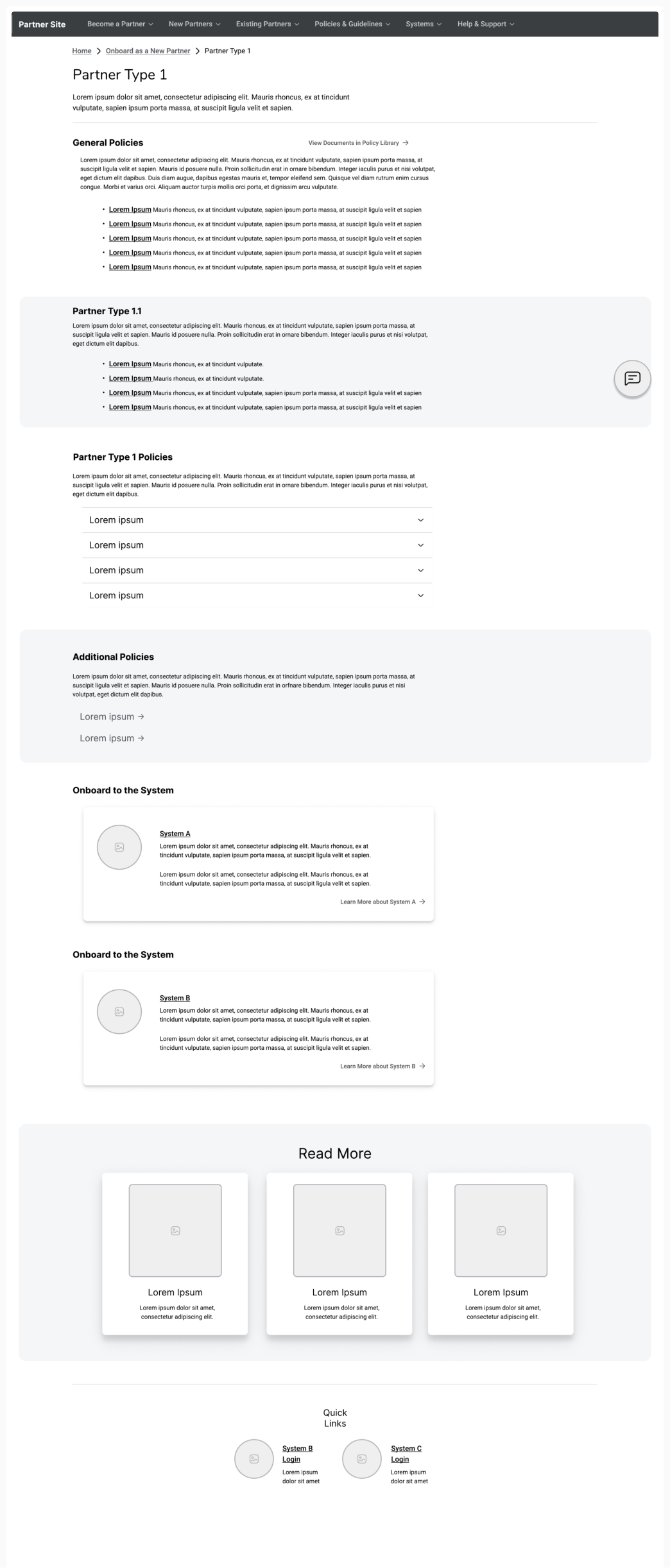
I proposed restructuring content around user groups and journeys rather than internal departments, consolidating duplicate information and creating clearer pathways between requirements, resources, and support.
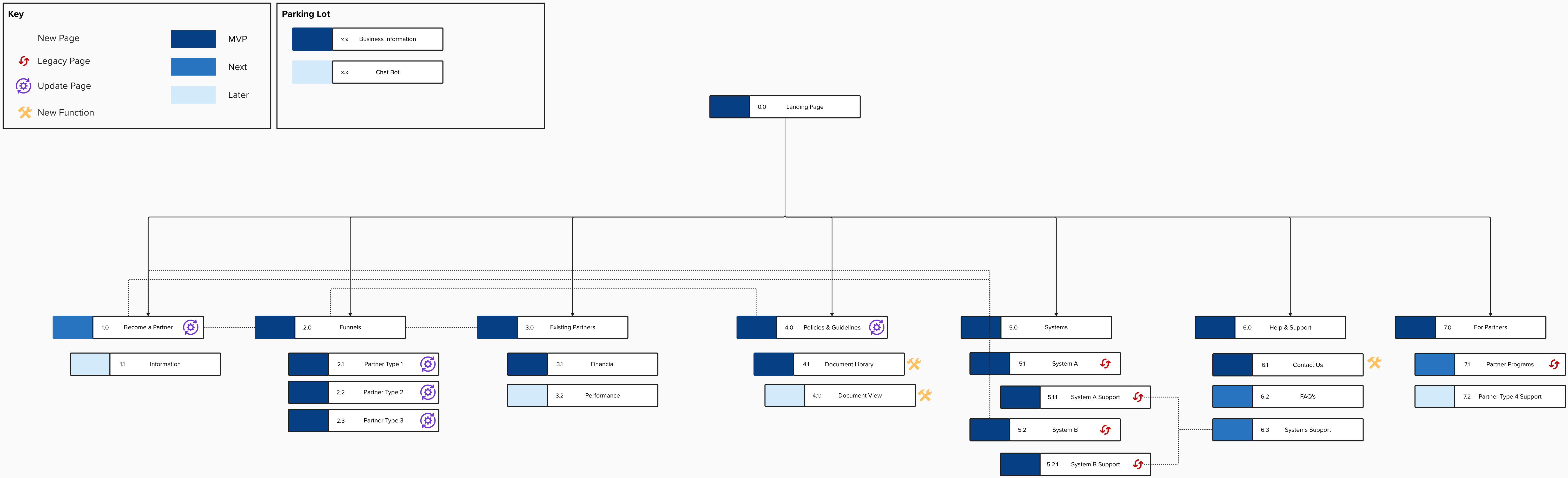
The design philosophy gave us a clear direction, but we needed a way to pressure-test that direction with stakeholders before moving into implementation.
I translated the principles and proposed information architecture into wireframes that made the future experience tangible. We used them to visualize how vendors might navigate the site, surface gaps and open questions, and confirm requirements with stakeholders.
The goal wasn't to finalize the interface—it was to create a shared picture of what the future experience could be and build confidence in the direction before moving forward.
An unexpected opportunity accelerated the timeline.
While we were defining the long-term vendor experience, a parallel corporate website redesign removed much of the existing vendor-facing content. What had been a future-state vision suddenly became an immediate need to rebuild the experience.
I used the principles and information architecture we'd established during discovery to guide the rebuild, working with content owners, business stakeholders, and implementation partners to translate the strategy into a production-ready experience.
Organized around user needs
Replaced department-based navigation with pathways based on vendor context and goals.
Designed for scanning
Reworked long-form requirements into clearer hierarchy and prioritized actions.
Built for consistency
Created reusable page patterns and content frameworks to establish a consistent experience across the site.
The work didn't stop when the new experience launched.
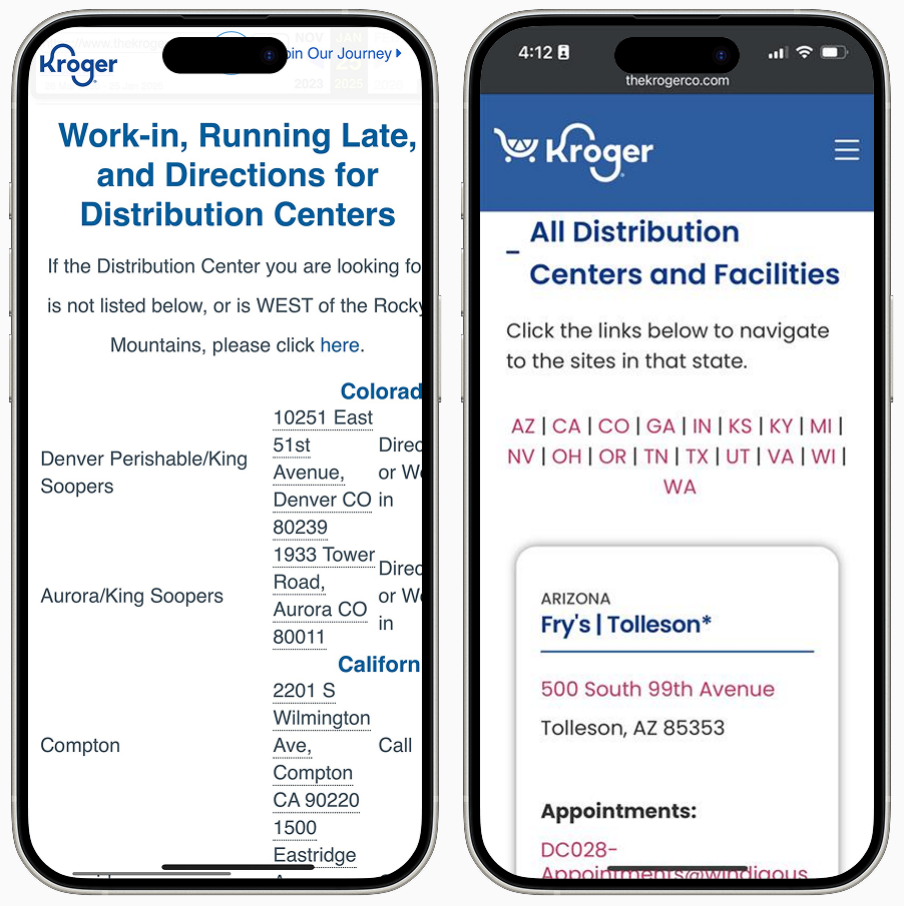
As implementation progressed, I used analytics to identify additional opportunities to improve the experience. For example, vendor resources showed meaningful usage across both desktop and mobile, prompting targeted improvements to mobile usability and responsive behavior.
From publishing content to designing a vendor experience
The redesigned experience launched successfully as the centralized destination for vendor expectations, policies, resources, and guidance.
Established a production-ready IA grounded in vendor needs.
Consolidated fragmented content into a more navigable experience.
Created reusable content frameworks and page patterns for future growth.,
The project demonstrated that design could extend beyond wireframes and recommendations—shaping not only what the organization published, but how vendors experienced it.
