Making Complex Data Easier to Find, Understand, and Trust
Research-led redesign of an enterprise relationship-discovery experience
Kroger Technology & Digital
I led research and design efforts to improve an enterprise tool used to understand relationships between organizations, facilities, and products. Although the platform contained valuable data, adoption remained concentrated among a small group of expert users. I investigated how current users worked, why potential users weren't adopting the tool, and how the experience could better support fast, confident decision-making.
Because this is an internal enterprise tool, I can't publicly share product screens or proprietary interface details. The visuals below have been recreated and sanitized to communicate the design thinking without exposing confidential information.
The product contained valuable information, but users struggled to find, interpret, and trust it efficiently.
The team needed to understand what made the tool valuable to existing users, what prevented broader adoption, and which improvements would have the greatest impact.
The question wasn't whether the data was valuable. It was whether users could confidently use it.
Research Activities
Current-user interviews
Workflows, use cases, information needs, workarounds, trust
Potential-user sessions
Unmet needs, alternative workflows, adoption barriers
Heuristic evaluation
Findability, accessibility, learnability, credibility, usefulness, clarity
Users needed answers fast
The tool was rarely a destination in itself. Users came in to answer a specific question, retrieve information, and return to their primary workflow.
Relationships mattered more than individual records
Users weren't simply looking for data points. They needed to understand how organizations, facilities, and products related to one another—and move between those relationships quickly.
Trust was a prerequisite for adoption
Users frequently questioned whether information was current, where it came from, and whether they could confidently act on it. Many verified information through other systems before relying on the platform.
The adoption problem wasn't a lack of valuable data. It was a lack of confidence in finding, understanding, and acting on that data.
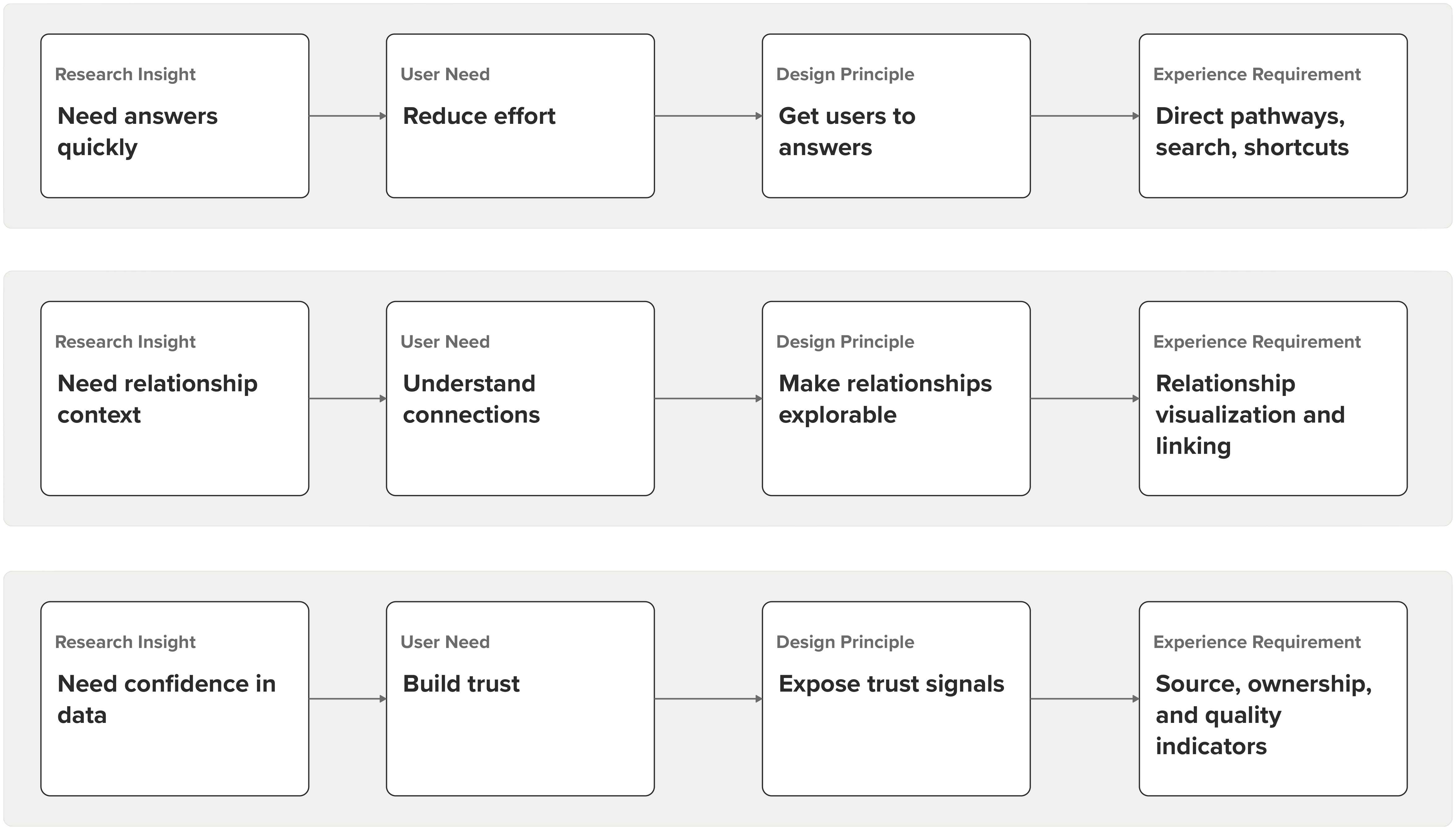
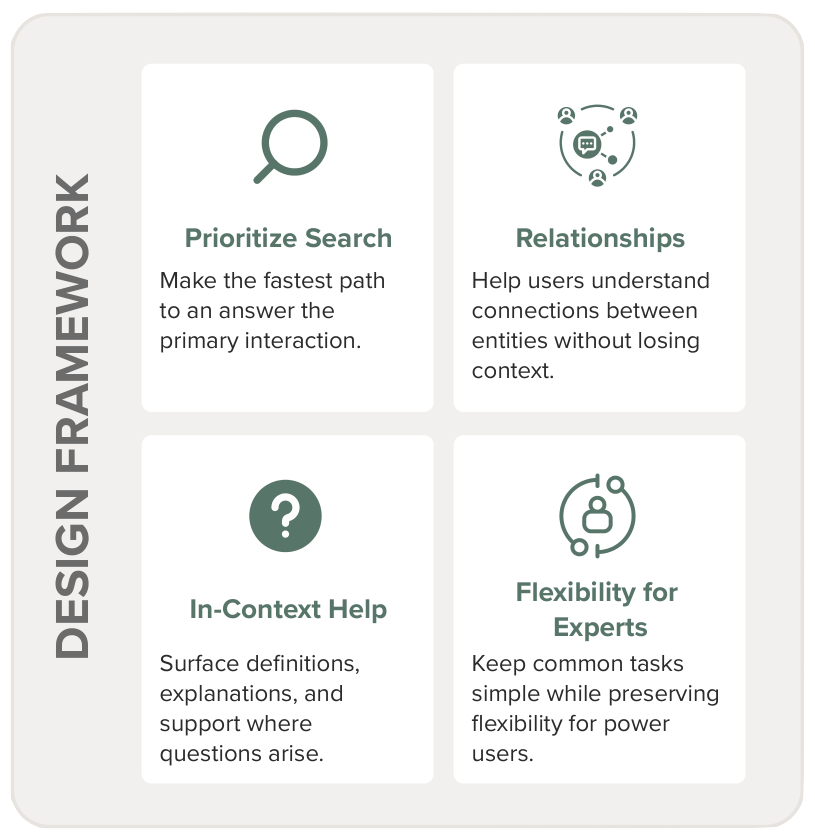
I redesigned around the questions users came to answer—not around the structure of the underlying data.
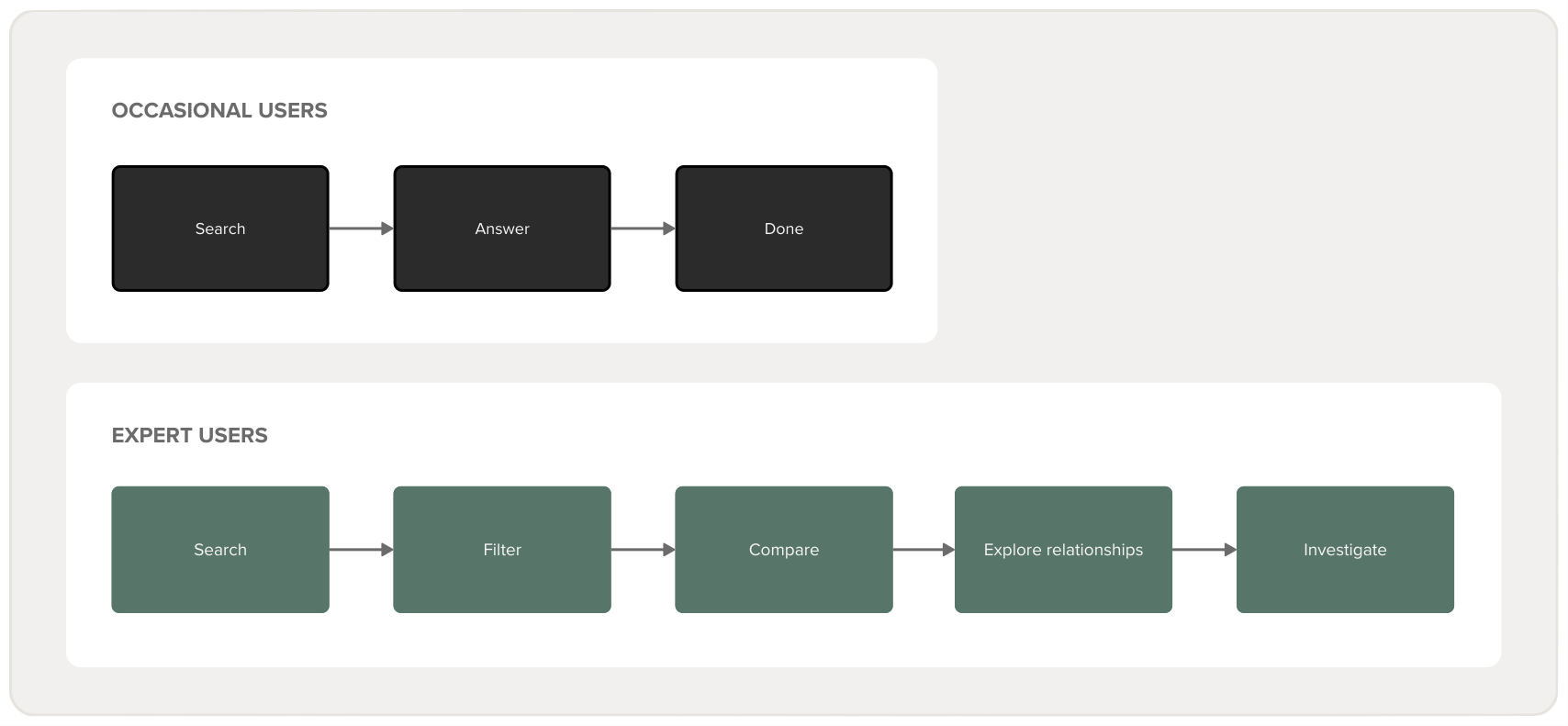
I redesigned the primary search flow around the most common lookup patterns, reducing unnecessary steps and improving error prevention.
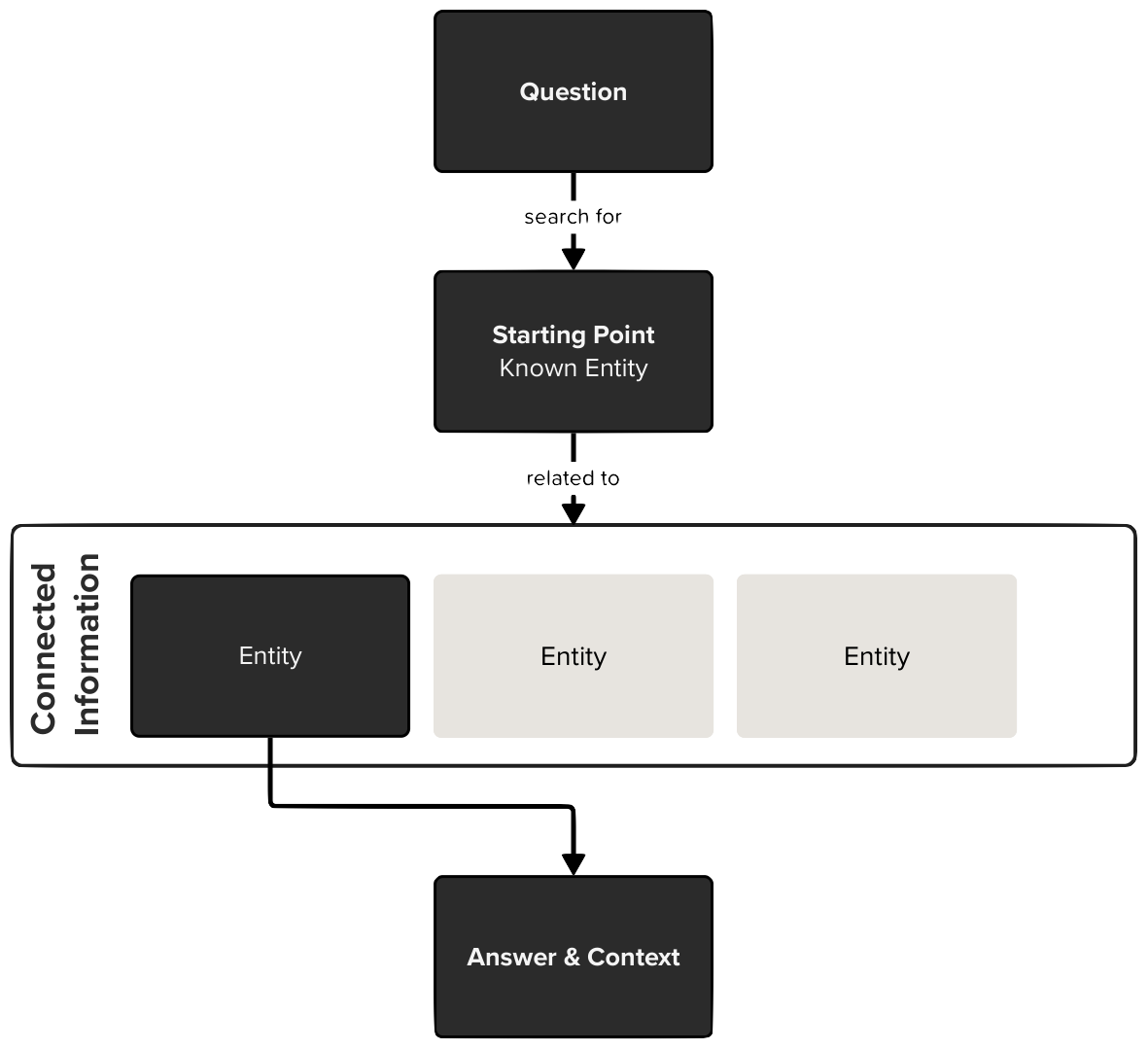
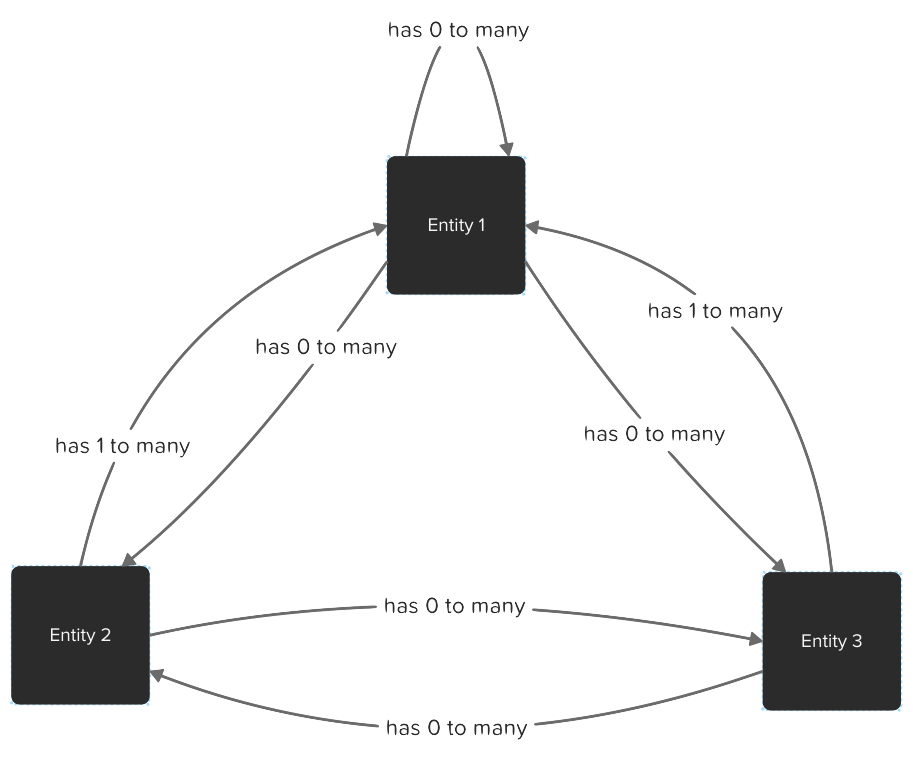
Rather than treating results as isolated records, I redesigned the experience to make relationships between entities more visible and easier to explore.
I introduced more flexible filtering, sorting, and exploration tools for expert users while keeping the primary experience straightforward for occasional users.
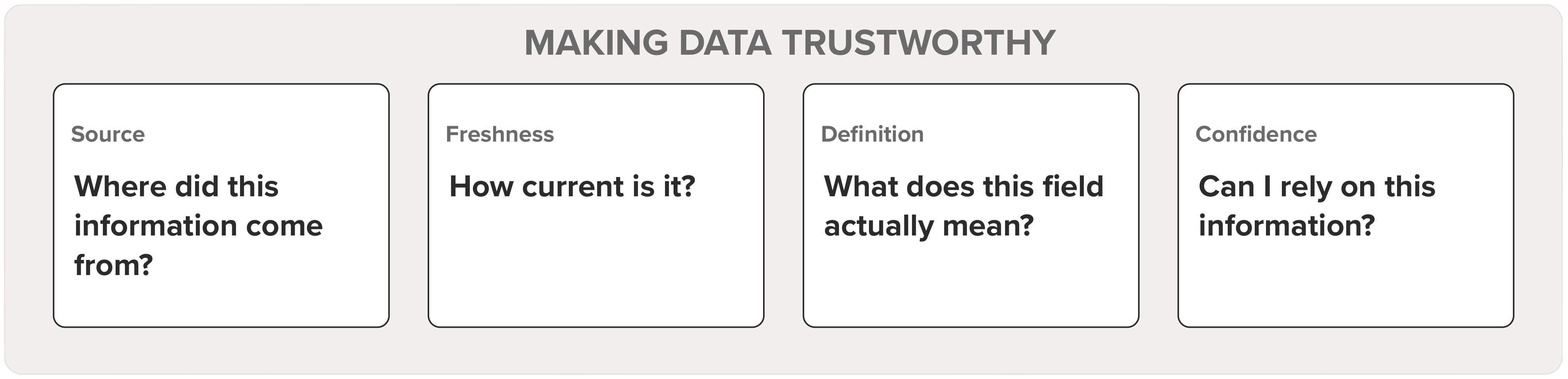
Finding the information wasn't enough. Users needed to believe it.
Research showed that uncertainty about data freshness and provenance often led users to verify information elsewhere. I translated that finding into recommendations for greater transparency around data sources, status, definitions, and support.
I partnered closely with the development team throughout the rebuild, answering implementation questions, reviewing the evolving experience, and providing QA feedback to ensure the final product aligned with the intended interaction patterns.
The research established a clearer understanding of user behavior, adoption barriers, and usability issues and translated those findings into a prioritized roadmap for improving the platform's core experience.
This project was one of my first real opportunities to work on a deeply complex enterprise tool—and it pushed me to think beyond individual screens and understand how the underlying systems, relationships, and user needs came together. It taught me how much of product design is about translating complexity: taking a complicated set of data and workflows and turning it into an interface that helps people find their way through it with confidence.
That experience shaped how I approach complex products today. The goal isn't to make the underlying complexity disappear. It's to make it understandable, navigable, and useful to the people who have to work with it.
